How digital tech is tackling construction’s biggest challenges

February 18, 2022

How digital tech is tackling construction’s biggest challengesFrom sustainability to shorter timelines, Mercury Engineering’s Sean Dowd discusses how the construction industry is rising to the challenge.

The growth of technology means a whole new world of construction. From data centres to semiconductor facilities, building these complex engineering projects requires specific skillsets along with cutting-edge technology.


Something that increasingly goes hand in hand with these construction projects is building information modelling (BIM), which is a digital representation of physical and functional characteristics of a particular facility.


One company using BIM to carry out its construction of data centres and other facilities is Mercury Engineering, a European contractor founded in Dublin in 1972. The company operates in a wide range of areas including enterprise data centres, advanced technology, life sciences and facility management.


‘Clients want projects to be completed as quickly as possible, to the highest standard possible’
– SEAN DOWD


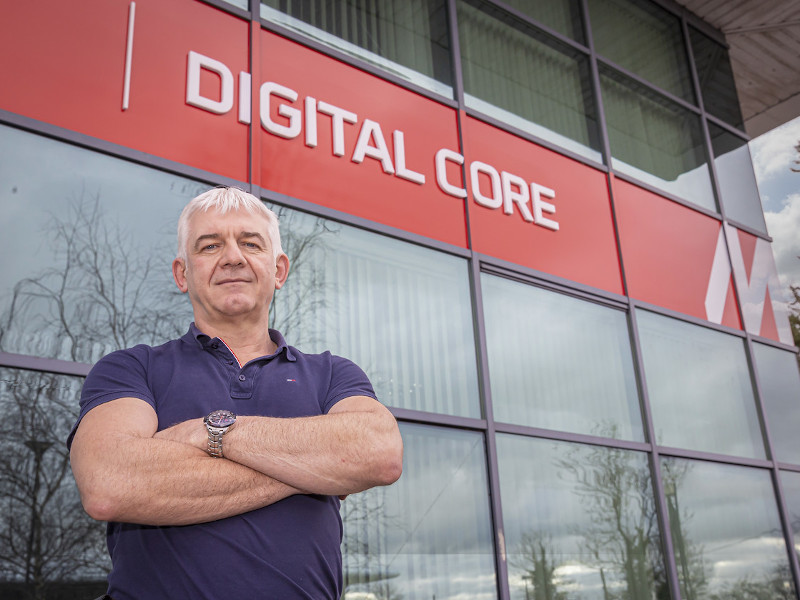
Sean Dowd, the company’s group BIM manager, told SiliconRepublic.com about the work that Mercury Engineering does.


“We utilise the most innovative and cutting-edge digital technologies. This enables more efficient design and construction to support the organisational growth of our clients,” he said.


“We pride ourselves at being at the edge of new technology and were one of the first contractors to implement HP’s new ZCentral 4R solution.”


Mercury Engineering has a partnership with HP, which provides it with tools, resources and support to give it an edge in the digital construction space.


“To best serve clients, a robust training strategy and plan is required along with the best facilities and equipment, and HP Inc has been a strategic partner in providing tools and solutions that help us to promote our core values,” said Dowd.


“Centralising device and resource management through the cloud allows Mercury to upscale on projects instantly while managing resources efficiently. High-powered, full-spec laptops used in the design and render process are now available 24/7 globally, reducing downtime and increasing project efficiency and turnaround.”


To further tap into digital construction, Mercury Engineering created its ‘digital core’ in Maynooth, a centralised hub containing two BIM modelling floors and a VR lab.


“Technology is how we future-proof our business and HP solutions create efficiencies that are fundamental to this,” said Dowd. “Centrally managed resources reduce hardware and scalable solutions have created cost efficiencies, while optimising workflow.”


Challenges in construction


When it comes to building new facilities and refurbishing existing sites, Dowd said one of the biggest challenges is how short the timelines are becoming for projects.


“Clients want projects to be completed as quickly as possible, to the highest standard possible, so that they can start making a return on their investment. This drives significant schedule pressure,” he said.


“With the BIM team placed at the front of each project, it is imperative that we can be mobilised quickly.”


As well as shorter timelines, sustainability is an ongoing challenge that all sectors have to face, and the construction industry is no exception.


However, Dowd said Mercury is currently developing design and construction workflows that allow for environmental impact benefits through the use of project building information models.


“Using the 3D digital construction model, we can calculate improvements on the project’s construction carbon footprint by modifying material quantities, specifications and suppliers (shipping distance) to reduce the carbon footprint and long-term sustainability of projects,” he said.


Don’t miss out on the knowledge you need to succeed. Sign up for the Daily Brief, Silicon Republic’s digest of need-to-know sci-tech news.


https://www.civilengineering.ai/how-digital-tech-is-tackling-constructions-biggest-challenges/

Las Vegas and Digital Twins – A Blueprint for a Clean City?

February 18, 2022
Las Vegas and Digital Twins – A Blueprint for a Clean City?Is Las Vegas a blueprint for a clean city? A seven sq km area of downtown Las Vegas is being used to demonstrate a net-zero carbon emissions future.

02 February 2022

You would be forgiven for not immediately thinking of Las Vegas when it comes to urban hubs of sustainability, but an ambitious efficiency project is underway in the US city.


What is The Las Vegas Digital Twin project?

As part of Cityzenith’s “Clean Cities - Clean Future”, a program designed to help drive down urban emissions, a seven sq km area of downtown Las Vegas is being used to demonstrate a net-zero carbon emissions future.


The Las Vegas Digital Twin project will leverage the city’s advanced 5G networking and IoT sensor network to analyse air quality, noise pollution, water management, and emissions from major buildings.


The base twin is now completed, and soon, stakeholders from across Las Vegas will be invited to join the project, including real estate owners, government agencies, university researchers, data partners, architects, and casino operators.


Alongside Cityzenith, project partner Terbine brings together and contextualizes IoT data from local government agencies, building operators, transportation systems, vehicle manufacturers and more, to provide the high volumes of sensor information needed by the urban Digital Twin.


Cityzenith’s Digital Twin platform, SmartWorld, manages and reports emissions performance and analytics across assets in real-time to ensure on-going operational metrics and compliance goals are maintained.


The company’s “Clean Cities – Clean Future” initiative has projects underway in major US cities, including Los Angeles and Phoenix, with more than a dozen major cities and building owners in queue to follow soon.


Cityzenith CEO and Founder Michael Jansen said: “We are honoured to be working with the City of Las Vegas, providing the market’s only end-to-end decarbonization solution for buildings in cities, to ensure Las Vegas’ buildings achieve net-zero emissions in the years to come quickly or without risk.”


Terbine CEO and Founder David Knight said: "Transitioning our home city into a clean, sustainable, and more attractive place to live and visit is a fantastic opportunity, and we’re delighted with our progress so far on this project. What we’re building here represents a model for how other cities can enable sustainability and a better quality of life for their citizens."


What is a Digital Twin?

Digital twins act as a testing environment, to gain data on a building’s operational performance and sustainability. It allows facilities managers and building owners to gather insightful data about the inner workings of a building, with the aim of saving construction and operational costs.


It can help with planning and forecasting, with everything from waste management to occupancy


According to Forbes, 500 major world cities will rely on digital twins for daily operations by 2026.


https://www.civilengineering.ai/las-vegas-and-digital-twins-a-blueprint-for-a-clean-city/

Preventative Maintenance Solutions: New Innovative Products for Smart Home and Building and Workplace Safety

February 18, 2022
Preventative Maintenance Solutions: New Innovative Products for Smart Home and Building and Workplace SafetySince its inception in 1933, Omron has become one of the leading innovators in design and manufacturing across a wide range of industries.…
Since its inception in 1933, Omron has become one of the leading innovators in design and manufacturing across a wide range of industries. From factory automation to healthcare, Omron’s skilled engineers have been hard at work developing new and improved products to suit the needs of nearly any developer. One of the fastest growing industries in terms of innovation is Smart Home and Building (SHB). As the world continues to adapt to global changes in how to operate day-to-day in the home and the office, as well as the ever-changing workforce, there has been an increased focus in products that can help automate regular maintenance and prevent workflow interruptions. Omron has plans underway for three key products that can assist with a variety of issues that may interrupt workflow and compromise worker safety, in a project called Irregular Event Zero.


Motor Condition Monitoring Device


One product currently under development is a Motor Condition Monitoring Device, designed with large machinery in mind, particularly within the HVAC, Elevator, and Industrial building marketplace. Under normal operating conditions, machines will wear over time with regular use, or can be damaged in the event of some irregular activity such as a storm or power outage. Oftentimes, this wear can go unnoticed by regular operators, or may not be detected until machines go under some form of routine inspection, which may not take place for several months. Too long, and the wear may trigger a severe breakdown that can interrupt workflow and cause a dangerous scenario for workers and other nearby persons.


In addition, the Motor Condition Monitoring Device is intended to be a cost-effective solution to help detect machine irregularities before disaster takes place. Consequently, this can help ensure worker safety, and prevent workflow from being interrupted and/or redirected from key operations. The device can detect subtle vibration changes from normal operation, and can send Bluetooth Low Energy (BLE) signals to workers to quickly alert them in the event of operation irregularity. The device will also have advantages in being easy to install vs other similar products currently existing for reading motor condition.


In-Helmet Environment Sensor


Using similar technology to Omron’s current environment sensor, in the 2JCIE part series, engineers are developing an in-helmet module designed for workers in the field in remote locations. Some workers may be subject to harsh weather conditions, and not close to proper transport and care in the event of an emergency. The in-helmet module will be designed to read for key environment conditions such as temperature, humidity, and vibration (such as in the event of a fall), and alert the user via BLE if conditions become too harsh. The sensor can also be linked to a larger network, so that a central office may also be able to see if workers’ conditions are too dangerous, or if a worker may have fallen.


Full Room Monitoring Device


Lastly, Omron is looking to combine many of its existing technologies into a full room monitoring device best fit for monitoring areas with sensitive equipment, such as server rooms or storage facilities with sensitive equipment. The sensors combined would be able to detect temperature, humidity, moisture, electronic discharge, and human activity to ensure safety for equipment and workers alike. The sensors will not only be able to keep equipment safe, but also allow for ensuring that there is no unexpected human activity within these areas.


https://www.civilengineering.ai/preventative-maintenance-solutions-new-innovative-products-for-smart-home-and-building-and-workplace-safety/

This contactless system combines embedded ML and sensors to improve elevator safety

February 18, 2022
This contactless system combines embedded ML and sensors to improve elevator safetyArduino Team — January 29th, 2022 As an entry into the 5th IEEE National Level Project Competition, Anway Pimpalkar and his team wanted to design a system that could help improve safety and usability within elevators by detecting if a human

As an entry into the 5th IEEE National Level Project Competition, Anway Pimpalkar and his team wanted to design a system that could help improve safety and usability within elevators by detecting if a human is present, the floor they wish to travel towards, and automatically go to the ground floor in the event of a fire.



For determining when a person is standing within the elevator’s cabin, Pimpalkar used a Nano 33 BLE Sense and an OV7675 camera module that take advantage of embedded machine learning for facial detection. From there, the Nano will notify the user via a blinking LED that it is ready to accept a verbal command for the floor number and will transport the user when processed. Perhaps most importantly, an MQ-2 smoke sensor and LM-35 temperature sensor were added to the custom PCB. These two pieces of hardware are responsible for sensing if there is a fire nearby and subsequently activating an alarm and then moving the cabin to the ground floor if needed.


Altogether, this project is a great showcase of how powerful tinyML can be when it comes to both safety and accessibility. To read more about the system, you can check out Pimpalkar’s GitHub repository here.


https://www.civilengineering.ai/this-contactless-system-combines-embedded-ml-and-sensors-to-improve-elevator-safety/

View Smart Windows to be Featured in Seattle-Area Skanska Office Project

February 17, 2022

View Smart Windows to be Featured in Seattle-Area Skanska Office ProjectMILPITAS, Calif. and BELLEVUE, Wash., Jan. 25, 2022 (GLOBE NEWSWIRE) -- View, Inc. (NASDAQ: VIEW) (“View”), the leader in smart building technologies, has been selected by global construction and development

MILPITAS, Calif. and BELLEVUE, Wash., Jan. 25, 2022 (GLOBE NEWSWIRE) -- View, Inc. (NASDAQ: VIEW) (“View”), the leader in smart building technologies, has been selected by global construction and development leader Skanska to be featured in The Eight, a Class-A high-rise office tower and one of the first buildings in the Bellevue Central Business District to feature smart windows.


Built, developed, and owned by Skanska USA Commercial Development, The Eight is a 25-story, 541,000 square-foot commercial office tower featuring retail spaces, a public plaza, and numerous exterior balconies. View Smart Windows will be part of a suite of tenant-focused amenities, including a dedicated floor for tenant events, a health and wellness center, electric vehicle and e-bike charging, and more. The windows will provide continuous views of Lake Washington and downtown Bellevue, while also reducing energy consumption at The Eight.


View Smart Windows use artificial intelligence to automatically adjust in response to outdoor conditions, controlling heat and glare and eliminating the need for blinds. The windows measurably improve the health and well-being of building occupants. A recent study found that people working in rooms with View Smart Windows experienced half as many headaches, slept 37 minutes longer each night, and performed 42% better on cognitive tests compared to those working in rooms with standard windows and blinds.


“The greater Seattle office sector is booming, and in a post-COVID market, amenities focused on tenant wellness will be more important than ever,” said Murphy McCullough, EVP and Regional Manager with Skanska. “Our investment in View Smart Windows furthers Skanska’s commitment to innovation and to enhancing the sustainability of the built environment.”


Skanska and View have maintained an ongoing, multi-year relationship — largely through office projects where Skanska USA Building served as a general contractor. Skanska has overseen the construction of numerous buildings that feature View Smart Windows, including 1155 Avenue of the Americas, a renovated Class-A office building in midtown Manhattan owned by the Durst Organization, and global biotechnology company Regeneron’s headquarters in Sleepy Hollow, New York.


“Skanska has long recognized that buildings of the future will be smart, healthy, and sustainable," added Dr. Rao Mulpuri, CEO of View. “Our deepening partnership reflects our shared ambition to transform how buildings are designed and experienced.”


Pickard Chilton served as the lead architect for The Eight, which broke ground in June 2021.


About View View is the leader in smart building technologies that transform buildings to improve human health and experience, reduce energy consumption and carbon emissions, and generate additional revenue for building owners. View Smart Windows use artificial intelligence to automatically adjust in response to the sun, eliminating the need for blinds and increasing access to natural light, while improving thermal comfort. Every View installation includes a cloud-connected smart building platform that can easily be extended to improve indoor cellular coverage, enhance building security, and reimagine the occupant experience. View is installed and designed into more than 90 million square feet of buildings including offices, hospitals, airports, educational facilities, hotels, and multi-family residences. For more information, please visit: www.view.com.


About Skanska Skanska is one of the world’s leading development and construction companies. Skanska’s core operations in the U.S. include developing self-financed commercial properties, building construction, and civil infrastructure. An industry-leading innovator in both safety and project execution, Skanska offers competitive solutions for traditional and complex assignments that build a more sustainable future for our customers and communities. Skanska’s U.S. commercial development operations has invested a total of $3.2 billion in commercial and multi-family projects, creating more than 10 million-square feet of sustainable and community focused developments in select U.S. markets. In 2020, Construction operations in the U.S. generated $6.5 billion in revenue. With U.S. headquarters in New York City, Skanska has 30 offices with 7,600 employees nationwide. Global revenue of parent company Skanska AB, headquartered in Stockholm and listed on the Stockholm Stock Exchange, totaled approximately $17.2 billion in 2020.


https://www.civilengineering.ai/view-smart-windows-to-be-featured-in-seattle-area-skanska-office-project-2/

SMART KEYPADS: A MUST FOR HOME AUTOMATION

February 17, 2022
Smart Keypads: A Must for Home AutomationSmart Keypads are the must have for home automation. Our new line of wireless smart keypads can control any appliance or device in your home. Choose the best home automation system in India based on your needs.

Homes these days have multiple types of lights – cove lights, chandeliers, wall décor lights, party lights and within these there is the added choice of dimmable lights, tunable lights, LED color strip lights and more. In addition to this lighting variety, there are other diverse comfort elements in a room. These are devices such as Fans, Air Conditioners , Curtains, Blinds, projectors, TVs and more. These various items in the home are rarely used one at a time, but rather they are turned on in some group combinations that suit the occupants requirement. These combinations are called ‘scenes’ or ‘profiles’ because they create the necessary ambience that the occupant wishes to experience.


Many home owners are adopting Home Automation solutions. Most Home Automation solutions allow users to create such ‘profiles’ or ‘scenes’ on their Smart Apps. Users can typically choose the various lighting, fans, AC, curtains and other combinations for each ‘profile’ and they can also change these profiles as their tastes or circumstances change. There can be profiles for when one wakes up in the morning (e.g ‘Good Morning’ profile) and another for when going to sleep. Similarly they may be for events, like when leaving the home (‘Good Bye’ profile) or when watching a movie (‘Cinema’ profile) and so forth.


While many Home Automation solutions allow the convenience of using profiles via Smart App or voice assistants like Alexa/Google, they do not offer physical ‘switch-like’ device on the walls that could trigger these same ‘profiles’. The introduction of ‘Keypads’ as a part of the Home Automation solution has changed that. Keypads now offers home automation users with tremendous flexibility to execute such ‘scenes’ or ‘profiles’ without needing to resort to a Smart App or Voice commands. BuildTrack’s keypads are designed to be identical to the Smart Touch Switches and can blend in within the switches. In fact they can also be part of a switch panel or independently on their own panel.


The advantages of the keypads are many,


- A keypad has a small footprint and does not occupy the space that multiple switches might take up on any wall. It can be used as an alternative to switches when home automation is deployed.

- BuildTrack keypads are unique in their ability to control not just lighting, but also curtains, blinds, ACs, Fans, TVs, Projector mounts and more. Most other keypads in the market can only handle lighting scenes.

- BuildTrack keypads are mapped to profiles that are defined on the Smart App, and since the Smart App profiles can be edited to add, remove or change specific devices (e.g. add/remove lights or change dimming levels or change desired AC temp settings) the keypads effectively serve as customizable switches.

- BuildTrack keypads support multi-way operation, i.e. they are 2-way, 3-way and more. If the same profile is set on multiple keypads across the home, then triggering one will show you the correct status on all

- Even if a home only choses BuildTrack Keypads instead of switches, BuildTrack still allows control of individual devices as switches on the Smart App.

- Keypads are available in wired and wireless formats. The wireless formats do not require any change to existing wiring.

- BuildTrack Keypads can co-exist with smart touch switches on the same switch panel, creating tremendous flexibility.

If you are interested in home automation, then take a look at BuildTrack smart keypads and smart touch switches for your home.


https://www.civilengineering.ai/smart-keypads-a-must-for-home-automation/

AI Traffic Light That Improves Traffic Flow By Up To 15% In Simulation Will Now Be Used In Real Life

February 16, 2022
AI Traffic Light That Improves Traffic Flow By Up To 15% In Simulation Will Now Be Used In Real Life | CarscoopsThe lights use high-def cameras and radar sensors to learn traffic patterns and adjust signals appropriately


The town of Lemgo in Germany is about to become a real-life laboratory for a project that aims to improve traffic flow as it will become the first place on earth to test “deep reinforcement learning” for traffic lights that have improved traffic flow by 10-15 percent in simulations.


A team at the Fraunhofer Institute for Optronics, along with a number of research partners, has installed high-resolution cameras and radar sensors to more accurately understand the traffic situation at an intersection in Lemgo. With that data, it has been running artificial intelligence simulations to develop more optimized signal patterns to help traffic flow more smoothly.


In simulations, this new traffic light control system has replaced the rule-based controls that can only take minimal data points into account. And the results have been good enough to encourage the team and the city to now try the AI at the intersection in real life


https://www.civilengineering.ai/ai-traffic-light-that-improves-traffic-flow-by-up-to-15-in-simulation-will-now-be-used-in-real-life/

8 trends shaping cities in 2022

February 16, 2022
8 trends shaping cities in 2022

The pandemic, public safety, the climate crisis and rising inequality are among the top 2022 challenges confronting cities.


By Cailin Crowe, Danielle McLean, Maria Rachal, Dan Zukowski and Jason Plautz


Editor's note: This story is part of a series on the trends that will shape the smart cities industry in 2022. 


Here’s the good news: With federal relief funds and the $1 trillion infrastructure legislation that passed last year, cities will have new resources to tackle challenges such as making public transportation more equitable and accommodating growing numbers of electric vehicles hitting the streets. If the Build Back Better bill becomes law, additional financial resources could help cities reduce greenhouse emissions and continue to grow the momentum around decarbonizing their building stocks. 


The bad news is that many serious issues cities have been facing in the past two years remain or have gotten worse. City leaders are grappling with the rising cost of housing, which has left many financially insecure. They are adapting to worsening and more frequent extreme weather events such as record-breaking heat, wildfires, winter storms and hurricanes. They are looking for new workers who can fill the many vacant public transportation jobs. And they are addressing rising crime rates amid calls for policing reform.


With the input of experts and researchers, Smart Cities Dive dug into these topics to look at how eight of the biggest trends facing cities will play out in 2022.


Crime and policing will continue to be top of mind for local leaders
From Philadelphia to Tucson, Arizona, over two-thirds of the country’s 40 most populous cities experienced higher rates of homicide in 2021 compared with the year prior, in many cases surpassing or nearly reaching record highs, according to CNN. As a result, public safety will likely remain a top priority for local leaders in 2022.


Crime and policing were key issues in many high-profile mayoral elections last November. Some of the winners promised to increase police presence in cities to mitigate crime, a stark contrast to the nationwide calls just a year prior to defund police departments.


Meanwhile, other local leaders and their constituents continue to advocate for and implement various police reforms, particularly pushing for stronger police oversight as some cities respond to the spike in crime by increasing police budgets.


Transit agencies will continue to focus on equity
The COVID-19 pandemic, combined with the national racial awakening over the past two years, brought equity issues to the fore in public transportation, where high fares and cutbacks in service have disproportionately affected low-income communities and communities of color.


Some transit systems reduced or eliminated fares for all riders or only for specific groups, such as seniors or low-income individuals. Buses in Kansas City, Worcester, Massachusetts, Richmond, Virginia, and Raleigh, North Carolina, are free to ride, and Boston’s new mayor wants to move in that direction.


However, transit ridership remains depressed as waves of COVID variants continue to upset once-normal work and personal travel patterns. That puts a strain on revenues for transit providers, potentially limiting an agency's ability to continue low or zero-fare programs.


Expect public transportation agencies to begin tapping the $89.9 billion in Infrastructure Investment and Jobs Act funds for public transit this year to buy more zero-emission buses, add dedicated bus lanes and upgrade bus shelters and train stations. Transit agencies in New York City, Los Angeles and Boston are also reorganizing their bus networks to provide more and better service to the communities that rely most on transit.


Agencies will continue working to engage local communities during the planning process for major construction projects, changes in service and new initiatives. New York and Atlanta are among those holding virtual public meetings and conducting other outreach to get input on their plans.


At the federal level, the U.S. Department of Transportation awarded $1 billion in discretionary grants to 90 projects in 47 states through the Rebuilding American Infrastructure with Sustainability and Equity (RAISE) program. Among other criteria, the RAISE program emphasizes projects that create good-paying jobs, address climate change and advance racial equity.


Smart city leaders will continue to collaborate across regions and organizations
The trend of regional smart city consortiums and their private partners joining forces will likely continue in the year ahead as smart city leaders seek to learn from each other and make more data-informed decisions while also leveraging new federal dollars.


Last fall, seven regional consortiums formed the National Smart Coalitions Partnership, one of the largest smart cities networks in the U.S., which now represents over 100 local governments.


That national partnership formed on the heels of the creation of a new lobbying group, The Coalition for Urban Innovation, which includes key industry groups and companies like the Smart Cities Council, Replica, and Via Transportation. As coalition advisory board member, urbanist and University of Toronto professor Richard Florida explained in an earlier email interview, federal investments in urban policy and innovation are fragmented across a host of cabinet agencies, thus better coordination could make those investments more efficient and impactful.


https://www.civilengineering.ai/8-trends-shaping-cities-in-2022/

Building smart cities and counties with the Infrastructure Act

February 14, 2022
Building smart cities and counties with the Infrastructure ActThe “smart city” concept has been adopted by cities and counties globally. While the term is inexact, a typical vision is of an IT-enabled environment that

The “smart city” concept has been adopted by cities and counties globally. While the term is inexact, a typical vision is of an IT-enabled environment that efficiently and effectively delivers public services; enables informed, proactive decision-making by the leadership; and promotes sustainability through better resource utilization.


To deliver on this vision, smart cities require a massive deployment of information and communications technologies (ICT), including wired and wireless technologies. Included in this ICT array would be a multitude of networks and sensors in an Internet of Things (IoT) framework that permeates all sectors of modern life. Applications include smart electric grids, intelligent transportation systems, integrated monitoring systems and decision-support systems, to name the most prominent.


While a true end-to-end “smart city” with all these applications does not yet exist, many cities across the globe, such as Helsinki, Singapore and Seoul, have made significant progress in delivering on the promise. Many others, such as Ho Chi Minh City and the Iskandar Region in Malaysia, are in the advanced planning stages. Unfortunately, while a handful of U.S. cities have implemented some isolated solutions, progress in the United States on a broader smart city deployment significantly lags the international players.


On the bright side, the recently passed and soon-to-be executed Infrastructure Act has great promise to promote smart cities and counties throughout the United States. Indeed, many of the Act’s provisions have a direct connection to smart city requirements:


- Broadband- Community Networks, for a connected populace ($45 billion)

- Middle-mile broadband networks for connected institutions ($1 billion)

- Transportation- Roads and bridges ($110 billion)

- Public transit ($39 billion) and rail ($66 billion)

- Airports ($25 billion) and ports ($17 billion)

- Zero- and low-emission buses and ferries ($7.5 billion)

- EV chargers ($7.5 billion)

- Electric grid, including smart, sustainable power ($65 billion)

- Water projects, including infrastructure, flood management, resiliency, and watershed restoration ($>100 billion)

Additional funding is available from Recovery Act funds. This is a smart-city planner’s dream come true, as a lack of funding to cover the start-up costs of building smart-city solutions has been one of the major impediments to progress. Looking at the Act’s funding provisions, one can certainly envision how cities and counties can make significant progress in their smart city visions based, for the most part, on a foundation built by these building blocks.


However, to move towards this end state, it will be necessary to align numerous initiatives funded via different sections of the bill. Unfortunately, the Act maintains the legacy silos and assigns multiple federal agencies to manage parts of the Act with funds distributed to the states for execution by states and localities. As such, the potential for wasteful, uncoordinated spending is very real.


Surely the way to get the most out of these funds is to find ways that different programs can support each other – after all, building blocks work best when connected. This is particularly crucial in progressing the smart city/county concept and putting America into leadership.


While Congress did its part in funding these programs, it is up to the executives in federal, state and local governments to implement them. In determining how these disparate grant programs are managed, the Administration has the opportunity, if not the responsibility, to maximize the value received from these funds by breaking down the legacy silos.


There are several actions the Biden Administration can take to forward this stance, but two seem to stand out for their relative ease of execution and potential to deliver results:


- President Joe Biden’s appointment of Mitch Landrieu to coordinate the Act’s execution has been well-received. Landrieu has the opportunity to identify overarching goals, such as smart cities, which could benefit from a cross-cutting approach that leverages multiple siloes.

- The Administration could also, where appropriate, define requirements for applicants to identify how they would align grant funding to forward these overarching goals to maximize the societal benefits of these funds. Grant applications that promote siloed solutions would be denied or sent back for revision.

- Additionally, the states themselves can take action. At the minimum, they should heed Landrieu’s call to appoint state implementation coordinators. City- and county-level coordinators should also be appointed.

The benefits of this approach could be used in non-urban areas as well. Deployment of precision agriculture, for example, would also be best served by a coordinated approach. The results would drive economic benefits for the heartland while increasing productivity and sustainability, as well as enhancing food security for both U.S. and international consumers.


As the White House itself has said, the Act’s funding is truly a once-in-generation opportunity to drive significant progress in areas where the nation lags behind. As history shows, without an integrated and coordinated approach to dispersing these funds, much of the money will end up being spent in siloed projects with little to no benefit to broader societal goals. As difficult as it was to get the Act passed, the Administration must remain engaged to avoid that outcome.


https://www.civilengineering.ai/building-smart-cities-and-counties-with-the-infrastructure-act/

Digital Twin platform nabs $6 million to expand platform in North America, APAC and Europe

February 14, 2022
Digital Twin platform nabs $6 million to expand platform in North America, APAC and EuropeThe premier source of European technology news, data, research, analysis and in-depth market intelligence.
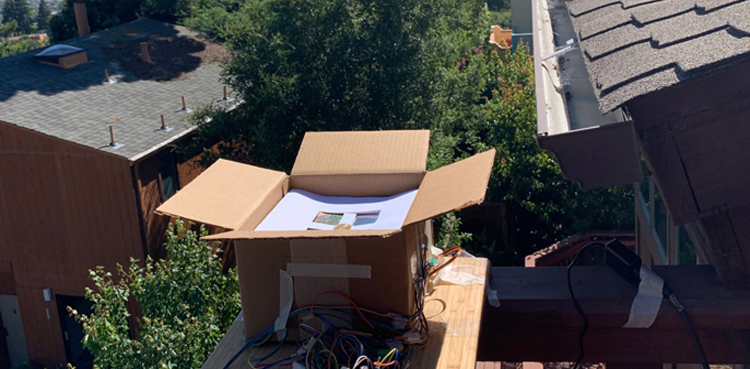
French and U.S. startup offering cloud-based reality data solutions, Cintoo has raised $6 million. The Series A funding was co-led by AMAVI Capital and Armilar Venture Partners and saw the participation of Accenture Ventures and Cintoo's prior investors, UI Investissement and Region Sud Investissement.


The investment will be leveraged to expand Cintoo Cloud's capabilities to meet the needs of Industry 4.0, building information modelling (BIM) and construction customers. The investment will also help the platform to expand its business in North America, Europe and APAC.


Founded in 2013 by Anis Meftah, Denis Thibaudin, Dominique Pouliquen, Leonardo H.Fonteles and Marc Antonini, the startup aims to find a solution for managing terabytes of Reality Capture data in the cloud for Architecture, Engineering, Construction, and Industry 4.0 businesses. The company launched its SaaS platform, Cintoo Cloud, in 2019, which uses its patent-pending, core point cloud-to-mesh engine to stream huge 3D data using any PC, laptop or tablet with a web browser.


Dominique Pouliquen, Cintoo's CEO, said: "Our mission is to become the world leader in cloud-based solutions to empower Reality Data on-demand and we've made significant in-roads since we launched Cintoo Cloud in early 2019.


Frédéric Van den Weghe, Managing Partner at AMAVI Capital said: “For industry 4.0 applications, it is the platform where digital twin data comes together and is enriched with IoT and AI data to become the dashboard of the factories of the future. Its blue chip customers base, including a.o. leading car manufacturers and engineering firms, and more than 20,000 active users on the platform are a clear sign of the value add the Cintoo product brings."


Pedro Ribeiro Santos, Partner at Armilar Venture Partners said: “Cintoo’s technology makes data accessible to anyone and open the doors to new uses of that data.”


Cintoo Cloud is currently used by over 20,000 users in building information modeling (BIM), construction and Industry 4.0 organisations across the U.S., Canada, Europe and APAC as a unique source of trustful Reality Data.


https://www.civilengineering.ai/digital-twin-platform-nabs-6-million-to-expand-platform-in-north-america-apac-and-europe/

SMART ROOF COATING KEEPS HOUSES WARM IN WINTER, COOL IN SUMMER

February 14, 2022
Smart roof coating keeps houses warm in winter, cool in summerScientists have developed an all-season smart-roof coating that keeps homes warm during the winter and cool during the summer without consuming natural

Scientists have developed an all-season smart-roof coating that keeps homes warm during the winter and cool during the summer without consuming natural gas or electricity.


Research findings reported in the journal Science point to a groundbreaking technology that outperforms commercial cool-roof systems in energy savings.


“Our all-season roof coating automatically switches from keeping you cool to warm, depending on outdoor air temperature. This is energy-free, emission-free air conditioning and heating, all in one device,” said Junqiao Wu, a faculty scientist in Berkeley Lab’s Materials Sciences Division and a UC Berkeley professor of materials science and engineering who led the study.


Today’s cool roof systems, such as reflective coatings, membranes, shingles, or tiles, have light-colored or darker “cool-colored” surfaces that cool homes by reflecting sunlight. These systems also emit some of the absorbed solar heat as thermal-infrared radiation; in this natural process known as radiative cooling, thermal-infrared light is radiated away from the surface.


The problem with many cool-roof systems currently on the market is that they continue to radiate heat in the winter, which drives up heating costs, Wu explained.


“Our new material — called a temperature-adaptive radiative coating or TARC — can enable energy savings by automatically turning off the radiative cooling in the winter, overcoming the problem of overcooling,” he said.


https://www.civilengineering.ai/smart-roof-coating-keeps-houses-warm-in-winter-cool-in-summer/

Using data’s ‘invisible’ influence to build smart wastewater networks

February 14, 2022
Using data’s ‘invisible’ influence to build smart wastewater networks - Utility WeekIsle Utilities’ Chris Thomas outlines the roles of technology and data in building successful wastewater asset management strategies and the creation of ‘smart’ networks.
Discussing the digitalisation of networks to achieve pre-emptive asset maintenance and preventing the need for major intervention at the Utility Week Innovate WWT Wastewater 2022 Conference, Isle Utilities’ head of enterprise and innovation, Chris Thomas, highlighted that wastewater lagged behind other sectors – such as gas and networks – in implementing new digital systems.


He caveated, however, that this afforded the industry unique insight into the dos and don’ts from the digitalisation process, with one of his main observations being that, far from a technical challenge, the smooth creation of “smart” networks revolves around organisational improvements.


Smart network building blocks


Breaking down the creation of a smart wastewater network into five simplified components – applications, communications, sensors, data and the business process – Thomas said that the latter two were the most significant hurdles in his view.


He explained that, from a technical standpoint, a wealth of application and sensor software and technology was readily available to tee up smart networks, while options such as 5G networks and radio spectrum to communicate are already widespread.


Yet in terms of the business process behind creating smart networks, he outlined four-phases of analytical maturity – describe, diagnose, predict and prescribe – and emphasised the importance of spending more time focusing on the often neglected early phases.


Thomas explained that when deploying solutions at scale “being dependable is more important than being clever” – meaning that rather than kickstarting a project based on prediction, spending time to describe and diagnose challenges as a foundation for project work was paramount.


He summarised that at the heart of effective digitalisation was “good operational reporting and integration with business processes before clever predictive activity” – or doing “the boring stuff” at scale bolstered by robust data architecture.


This spans reliable KPI reporting, automated checks, balances and processes across a business and detailed performance management of data and people.


https://www.civilengineering.ai/using-datas-invisible-influence-to-build-smart-wastewater-networks/

Harnessing machine learning to improve site safety

February 14, 2022

Site MaintenanceSorry for the inconvenience but we’re performing some maintenance at the moment. We’ll be back online shortly!

Harnessing machine learning to improve site safety

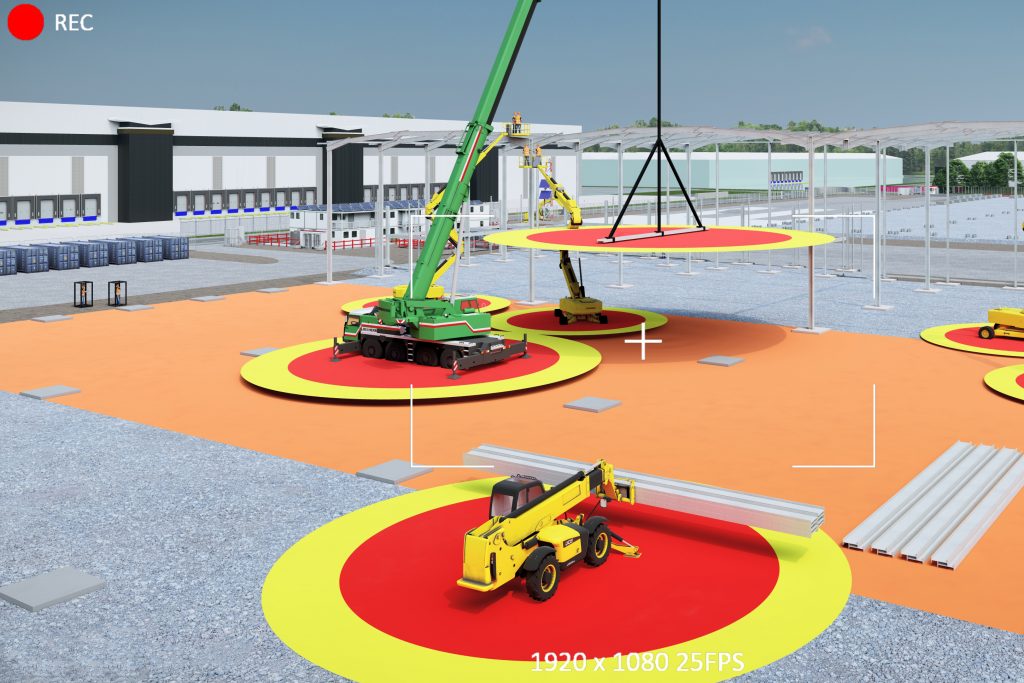
An Innovate UK-funded project aims to enhance site safety by using machine learning technologies to identify hazards in real-time and send alerts.


https://www.civilengineering.ai/harnessing-machine-learning-to-improve-site-safety/
 
Copyright © Ai4civilengineering